
 Loading...

Biography
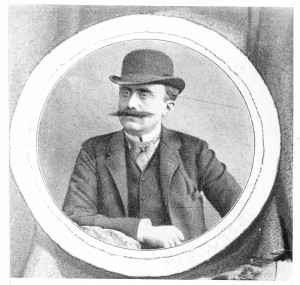
Jan Leon Antoni Tyszkiewicz-Łohojska comes from the second Biržai branch of the Lithuanian noble family Tiškevičiai. His father was Mykolas Tiškevičius, landowner of Biržai, and his mother Marija Radvilaitė (1830–1902). His elder brother was Juozapas Tiškevičius, heir to the Biržai Majorate.
On September 4, 1878 he married Klementinas Potockas (1856–1921) in Lviv. They had a son, Alfredas Jonas Tiškevičius (1882–1930).
In his youth, he served in the army of the Russian Empire, a junior lieutenant of the Light Guard Cavalry Regiment.
His elder brother Joseph, unable to manage the majority, decided to give it up in favor of his younger brother. Marija Tiškevičienė began to make sure that an exception was made in the decree of inheritance of the majority, because the laws of the Russian Empire did not allow the transfer of the majority. It could only be inherited. Exclusive consent of the emperor was required, but Alexander II initially refused to grant it and only agreed under the patronage of Alexander Potapov.
Majorat brought a large income, married and lived in Paris with his wife for several years very luxuriously, participated in charity evenings at the Lambert Palace. in Vilnius in 1881 he bought an apartment, but the countess wanted to have a luxurious representative palace. The Tiškevičiai built a new, original palace on the Neris waterfront (now 1/8 Žygimantų St., Library of the Lithuanian Academy of Sciences) according to the project of Kiprijon Maciulevičius.
The paradisiacal nature of the palace was emphasized by the loggia, which was designed for carriages to approach right next to the door, the vestibule, which is divided by two pairs of double columns and a grand staircase. Among other residences in Vilnius, Tiškevičienė's palace stands out for its ambition typical of European cities. Already after a couple of years, Klementina wanted her lifestyle to become a role model for the Vilnius nobility, she wanted to occupy the same position in Vilnius as her mother had in Lviv.
Jonas Tiškevičius rebuilt the Biržai brewery, bought new German equipment, and hired German brewers. In the last decade of the 19th century, when the crisis broke out, the prices of agricultural products fell, many tenants could not pay the agreed rent, others abandoned the leased tenements, and the count's financial situation worsened. A match factory was planned to be built in the village of Šleideriškis in about 1899.
Engineers were invited from abroad for construction work and machines were bought to produce matches, but when the Russian engineers demolished the structures, Tiškevičius was very upset. He fell ill and died in 1901.