 Loading...

 Loading...
Biography
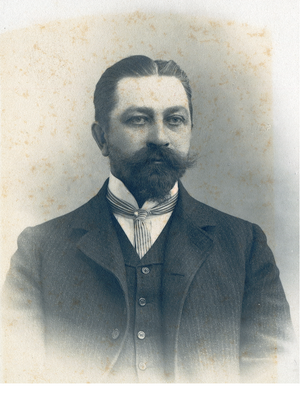
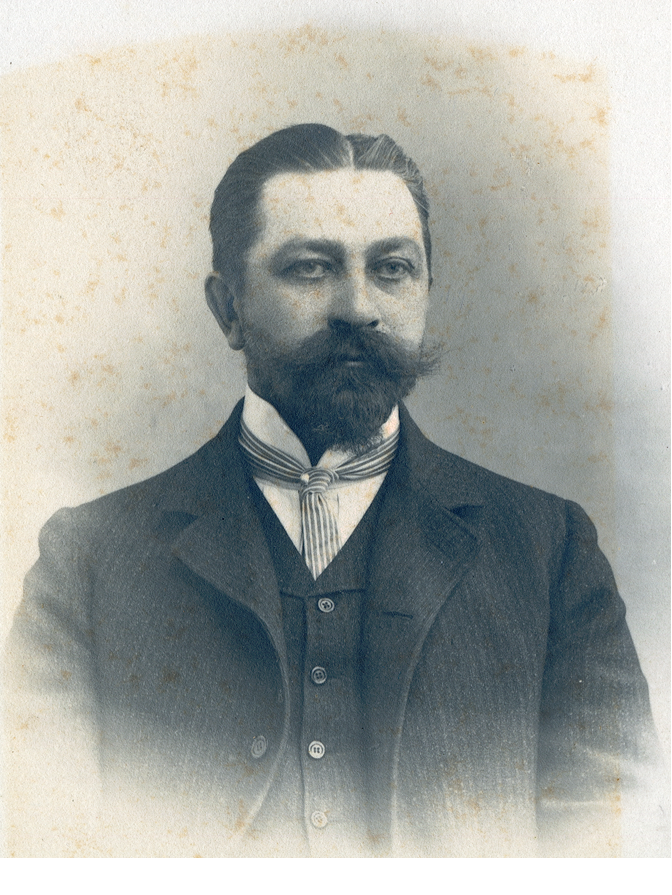
Aleksander Tyszkiewicz-Łohojski was born as the son of Józef, heir to the estate in Landwarów (later in Kretinga), and Zofia née Horwatt. In 1883, he graduated from the Nikolaevsky School of Military Engineers in St. Petersburg, and later served for three years as a sapper in the Imperial Guard.
After returning to Lithuania, he lived in Kretinga - the estate belonging to the Tyszkiewicz family. He was also the owner of the estates of Duniłowicze near Wilejka and Ostrożanka in the Masyrian Polesie.
He was active in society - in 1892 he joined the Noble Club in Vilnius, and eight years later he was among the honorary judges of the Telšiai district. In the same year, he was elected a member of the board of the Kaunas Agricultural Society, of which he was vice-president in 1905–1906.
In the autumn of 1905 he took part in the work of the so-called Land Commission, whose task was to introduce the institution of lands in the governorates of the Northwest Territories. He supported broad autonomy of the Lithuanian lands, the right to their social and cultural development, and the equal rights of the three nationalities living in the Grand Duchy of Lithuania.
On April 6, 1906, he was elected a member of the State Council, where he served, among others, member of the personal composition and internal device committee. He was an elector of the 1st and 4th Duma from the landowners' pool of the Telšiai district.
In 1909, he founded a Polish gymnasium in Telšiai, becoming the chairman of the Society for its maintenance (until 1915). In the years 1912–1915 he headed the Telsha branch of the Kaunas Agricultural Society.
After the outbreak of World War I, he moved to St. Petersburg, taking up the post of head of the Russian Ministry of Internal Affairs' department for displacement, and dealt with the problem of war refugees from the western lands of the Empire.
As a result of the outbreak of the October Revolution, he returned to Samogitia, where the German authorities appointed him a delegate for the Polish population to the head of the district in Kretinga. After Lithuania gained independence in 1918, he supported loyal cooperation with the Lithuanian state, and was, among others, a member of the Union of Lithuanian Farmers, close to nationalists, and headed the commune council in Kretinga. Despite this, a significant part of the property belonging to the Cretan Tyszkiewicz line was taken over by the state under the agrarian reform adopted in 1922.
He was married to Maria Pusłowska (1866–1939), the owner of the Giełgudyszki estate near Jurbork.