Virtual Vacation!
In about 1963/64 as part of a family holiday, my family then 2 parents and 6 children visited Clovelly on the north coast of Devon in England.
In June 2005 Robbie and I visited Clovelly on our first trip to England.
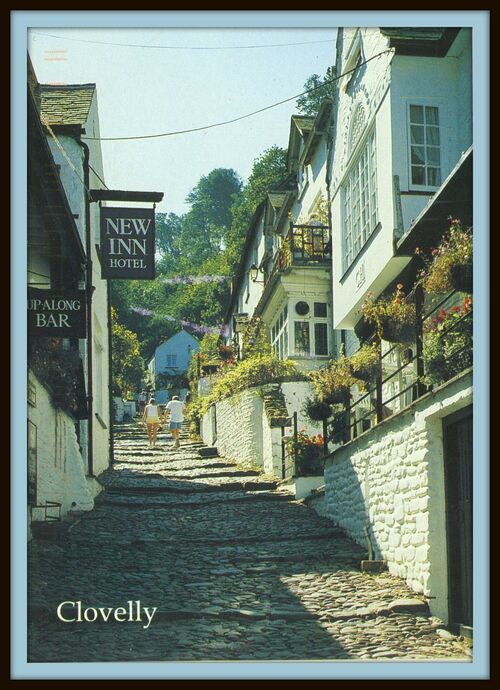
Clovelly is a historic, privately-owned fishing village built into a 400 foot cliff in North Devon, England, well known for its steep, car free cobbled streets and picturesque 400-500 year old cottages
This photo is a scanned postcard, this is the main street. This street drops 400ft in the half mile down to the small harbour.
Originally the estate was owned by William the Conqueror, King of England, described as ‘Clovelie’ in the Doomsday book of 1085, and given to his wife Matilda of Flanders.
The village is part of a local estate, which has been passed through only three families since the mid-13th century and the reign of Richard II. Later it was bought by the Cary family who are said to have built the original stone breakwater, which created a harbour and transformed the site into a much-needed fishing village.
Because the village as part of the estate is privately owned and the houses are also owned by the estate and because it is such a popular place to visit, there is an entrance fee, part of which is a parking charge, no cars are allowed in the village, for several reasons the most obvious one is the roads, no, really they aren’t roads they are cobbled paths which are far too steep and too narrow.
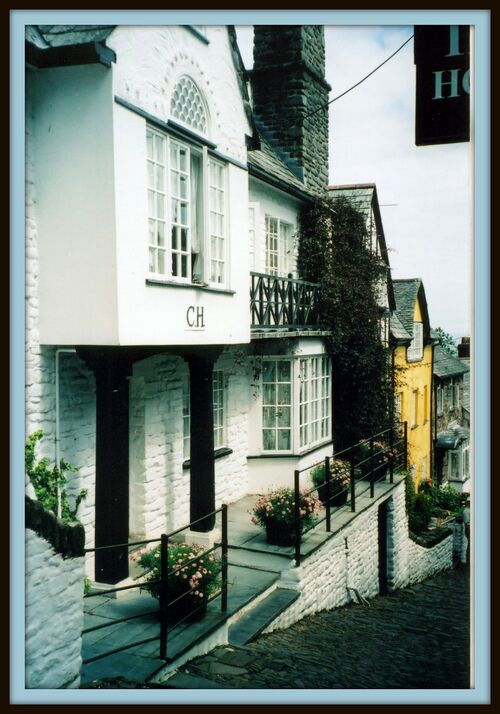
The entry fee is how the village’s upkeep is funded by the family who currently own the estate, the Rous family who are part of the Hamlyn family, who have managed the village since 1738. Including a recent project to insulate the 107, 17th-century buildings of the village over 5 years, reducing energy bills while preserving their character and beauty, with the only access for workers via the steep cobbled streets.
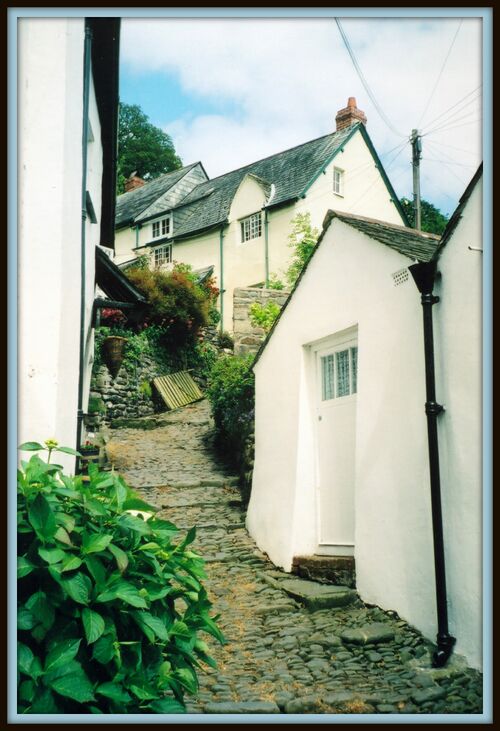
There are no holiday cottages allowed in the main village and no concessions for the tourist industry. The visitor centre includes a gift shop and a cafe and the visitor centre is the only place in Clovelly which sells souvenirs: commercialisation has been kept out of the village in order to protect its heritage and authenticity. In fact, apart from the visitor centre, every single property is over 400 years old.
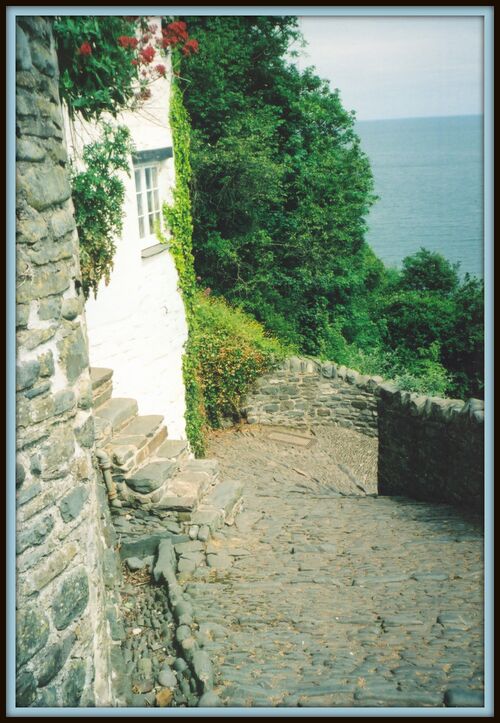
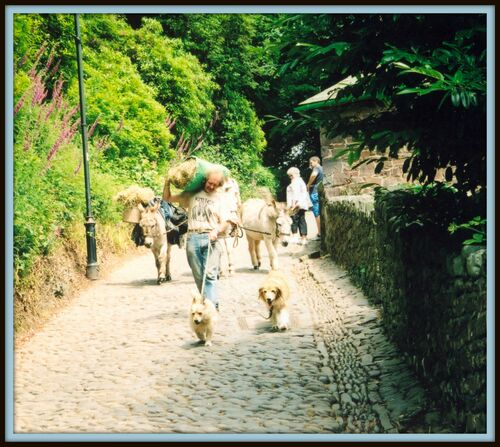
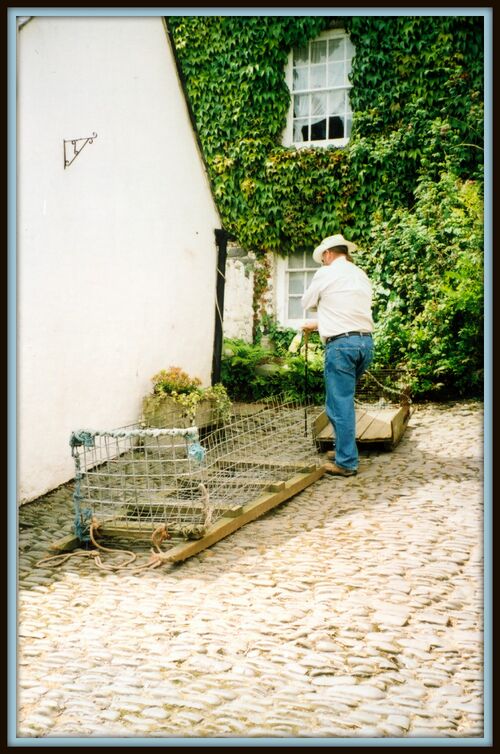
There are about 80 cottages, two chapels, two hotels and five farms, full time residence is a requirement of tenancy for residents of Clovelly. The village relies on traditional sledges and local donkeys to transport goods. A “sledge” is a basket or box fixed on to wooden runners, which is the only way of moving stuff down the cobbled slopes to their houses, this includes everything from food and groceries to furniture and appliances! In the past donkeys were used and sometimes still are. Clovelly’s quayside dates back to the 14th Century when the village was a busy fishing port.
In 2005 they were still using donkeys.
This is Robbie looking at some sledges
This is a younger sibling pic taken by my dad.
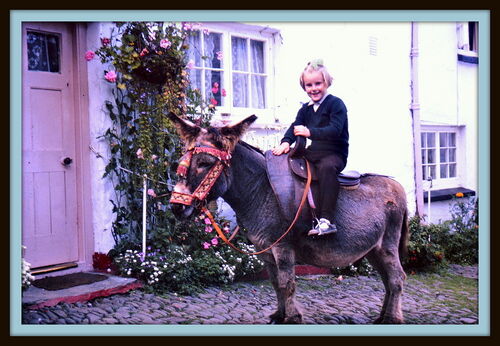
The donkeys used to carry the heavy baskets of herring in special pack saddles up the narrow cobbled street from the harbour to the carriers’ carts.
This pic below was taken by my dad.
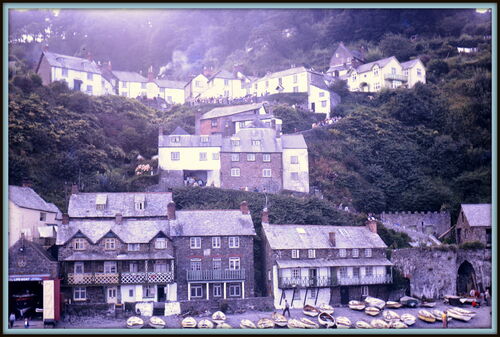
The oldest house in the village, is “Crazy Kate’s Cottage”, it might be the house on the right on the beach level, was named after a fisherman’s wife who was so distressed after witnessing her husband drown in the harbour that she drowned herself to join him. On the left at the bottom you can see the red door on the Royal National Lifeboat Institution (RNLI) Lifeboat Station

